On September 28, 2022, Kim Monson examines the constitutional role of sheriffs in protecting liberty with Sheriff Richard Mack, founder of the Constitutional Sheriffs and Peace Officers Association, and explores the inseparable relationship between the Declaration of Independence and the Constitution with patriotic historian Ben Martin.
Richard Mack recounts his landmark 1994 lawsuit against the Brady Bill, which attempted to commandeer local sheriffs for federal gun control enforcement. The former Graham County, Arizona sheriff explains how he and Sheriff Prince of Montana took their case all the way to the United States Supreme Court, winning a decisive victory in 1997. Justice Antonin Scalia’s opinion established the most powerful Tenth Amendment decision in American history, affirming that states are not subject to federal direction.
Mack argues that the Constitution strictly limits federal authority and that sheriffs serve as the last line of defense against unconstitutional federal overreach. He cites the Federalist Papers, noting how Scalia’s opinion drew directly from Federalist 51’s warning that different governments must control each other. The decision affirms that sheriffs work for the people of their counties, not for Congress or the president.
“The Congress or the president does not dictate what we do in our individual counties. I worked for the people of Graham County. They paid my salary. They appointed me their sheriff.”
Richard Mack, Founder, Constitutional Sheriffs and Peace Officers Association
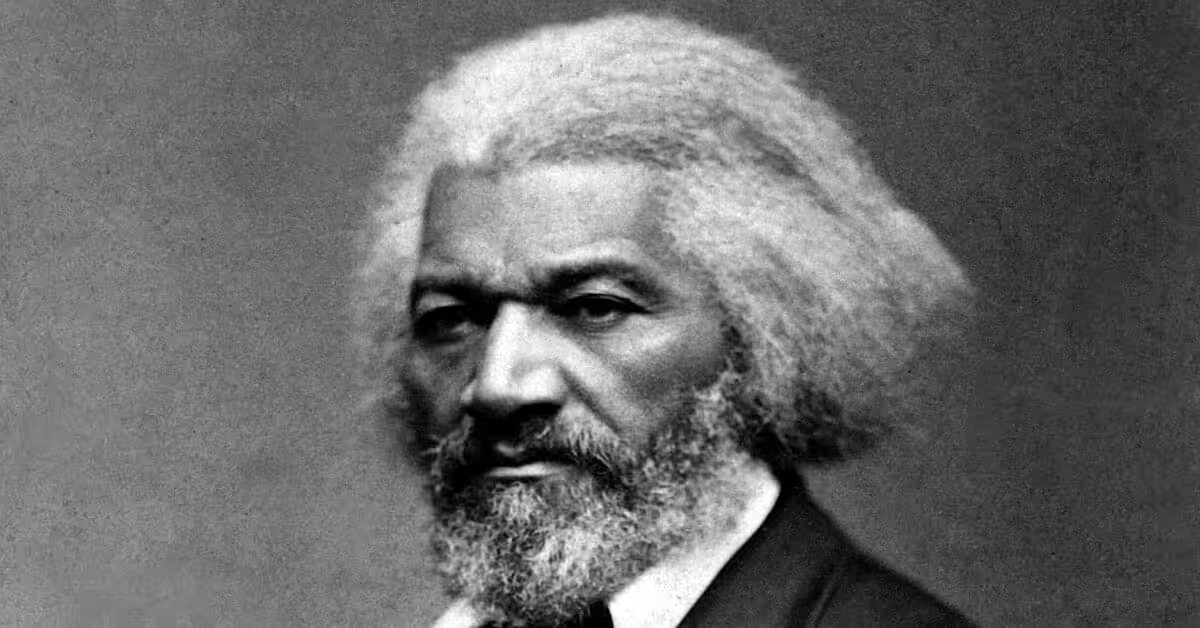
Ben Martin, a patriotic historian and former Army Ranger, explains how the Declaration of Independence and Constitution must be understood together. The Declaration establishes the universal principles of liberty, while the Constitution creates the governmental structure to secure those rights. Martin emphasizes that Frederick Douglass, born into slavery, came to view the Constitution as a glorious liberty document and the abolitionist’s greatest weapon against slavery.
Martin traces the Constitution’s creation from the failed Articles of Confederation through the Philadelphia Convention of 1787. He explains how Benjamin Franklin’s famous speech persuaded reluctant delegates to sign, noting that Franklin acknowledged the Constitution’s imperfections while recognizing it as the best achievable government. The Constitution’s seven articles establish separated powers and checks and balances designed to prevent tyranny.
“To our founders, liberty is a responsible exercise of freedom. Animals could be set free, but liberty can only be applied to humans who have reason and a conscience to differentiate between bad and good.”
Ben Martin, Patriotic Historian

Episode from The Kim Monson Show
Episode from The Kim Monson Show
Episode from The Kim Monson Show