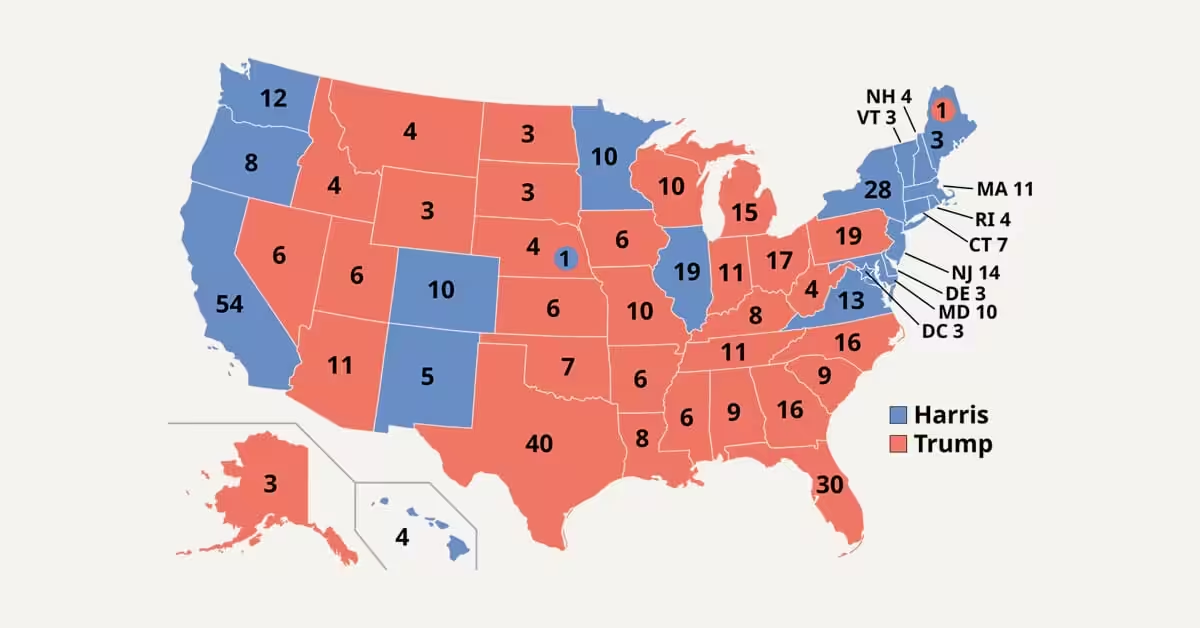
On January 6, 2025, Rob Natelson and Rebecca Lavrenz joined the show. Constitutional scholar Rob Natelson explained the nine factors the Founders considered when designing the Electoral College, including ensuring wide popularity, preventing regional candidates, maintaining executive competence, and protecting against foreign influence Rebecca Lavrenz recounted her experience at the Capitol on January 6, 2021, where she briefly entered the building to.
Constitutional scholar Rob Natelson joined on the day Congress was set to certify Donald Trump’s electoral victory. Natelson explained that discussions of the Electoral College tend to be oversimplified, noting that it’s actually one component of a four-step presidential election system: people vote for electors, electors vote for president, Congress certifies the results, and potentially a runoff occurs in the House.
“We have a complicated presidential electoral system. And the Electoral College is only one component of that. There actually are four separate stages.”
Natelson detailed the nine factors the Constitutional Convention considered when designing the presidential election system. The founders sought to ensure wide popularity of candidates, prevent regional or sectional candidates from winning, maintain executive competence, preserve presidential independence from Congress, prevent cabal and corruption, protect against foreign influence, involve states in the process, give Congress a role, and ensure public legitimacy of results.
“James Wilson, one of the leading delegates who represented Pennsylvania, said this was the toughest problem the framers of the Constitution had to face.”
Natelson criticized the National Popular Vote Compact, which Colorado adopted in 2019, explaining that countries using direct popular vote often elect leaders with only 25-36 percent support. He cited the 1860 election of Abraham Lincoln with 39 percent of the vote concentrated in the North as the one time the Electoral College failed to ensure broad geographic support, leading to the country’s breakup.
“If you have a straight popular vote system where a plurality of the people elect the president, you would have a system whereby somebody could be elected with 36 percent of the vote or 25 percent of the vote.”
The constitutional expert explained that electors vote in their respective state capitals rather than gathering in one location, making bribery or foreign manipulation extremely difficult. He noted that having electors chosen by people in their states, then disbanding after voting, prevents the president from becoming dependent on any standing body that could influence decisions.
Rebecca Lavrenz, known as the praying grandma, recounted her experience on January 6, 2021. She drove 25 hours to Washington after feeling called to pray for the country, refusing to fly because she wouldn’t wear a mask. Standing on the east side of the Capitol, she experienced what she described as an overwhelming spiritual presence.
“I felt like God was saying in my heart that if those barricades come down, that he wanted me and the doors open to the Capitol building, that I was supposed to carry his presence in.”
Lavrenz explained that when the doors opened around 2:30 PM, she entered with others, staying within barricades for approximately ten minutes without touching anything or speaking to anyone except briefly acknowledging a police officer. She described seeing no violence during her time inside and witnessing someone tell others not to damage the building.
After a six-day trial in March 2024, Lavrenz was convicted on four federal misdemeanors. The jury deliberated for 26 hours, unusually long compared to other cases. Her attorneys said the judge’s instruction that First Amendment rights could not be exercised in the restricted Capitol area left the jury little choice.
“I knew that I could never take a plea, because I knew I was standing up for something much bigger than what was being done on the outside.”
She received 12 months probation, six months house arrest with an ankle monitor, six months banned from the internet, and a $103,000 fine which her attorneys called the largest misdemeanor fine in U.S. history.
Lavrenz is appealing her conviction, specifically challenging the judge’s ruling on First Amendment rights at the Capitol. She indicated that even if President Trump offers a pardon, she may decline it to pursue her appeal and establish precedent that citizens have constitutional rights at the Capitol.
“It’s not about me. It’s about we, the people. And that’s why I’m doing this.”

Episode from The Kim Monson Show
Episode from The Kim Monson Show
Today is Kim’s Ancestry Show. “We the People” must learn and love our history in order for our Constitutional Republic to remain strong. The...